


Application selection brief
Structural Steel Selection for Fabrication Projects
Structural steel purchasing begins with the design basis and the fabrication route. Strength is one input among thickness effects, toughness, weldability, through-thickness behavior, dimensional tolerance, surface condition, cutting, forming, welding, coating, traceability, and erection sequence. The RFQ should preserve the grade designation and its governing standard.
Selection inputs
Service conditions to define
- Design code, member function, load path, strength class, service temperature, fatigue or seismic demand, and any fire or corrosion design provisions.
- Product form and thickness, including plate, coil-derived sheet, section, bar, or fabricated blank, with tolerance and flatness requirements.
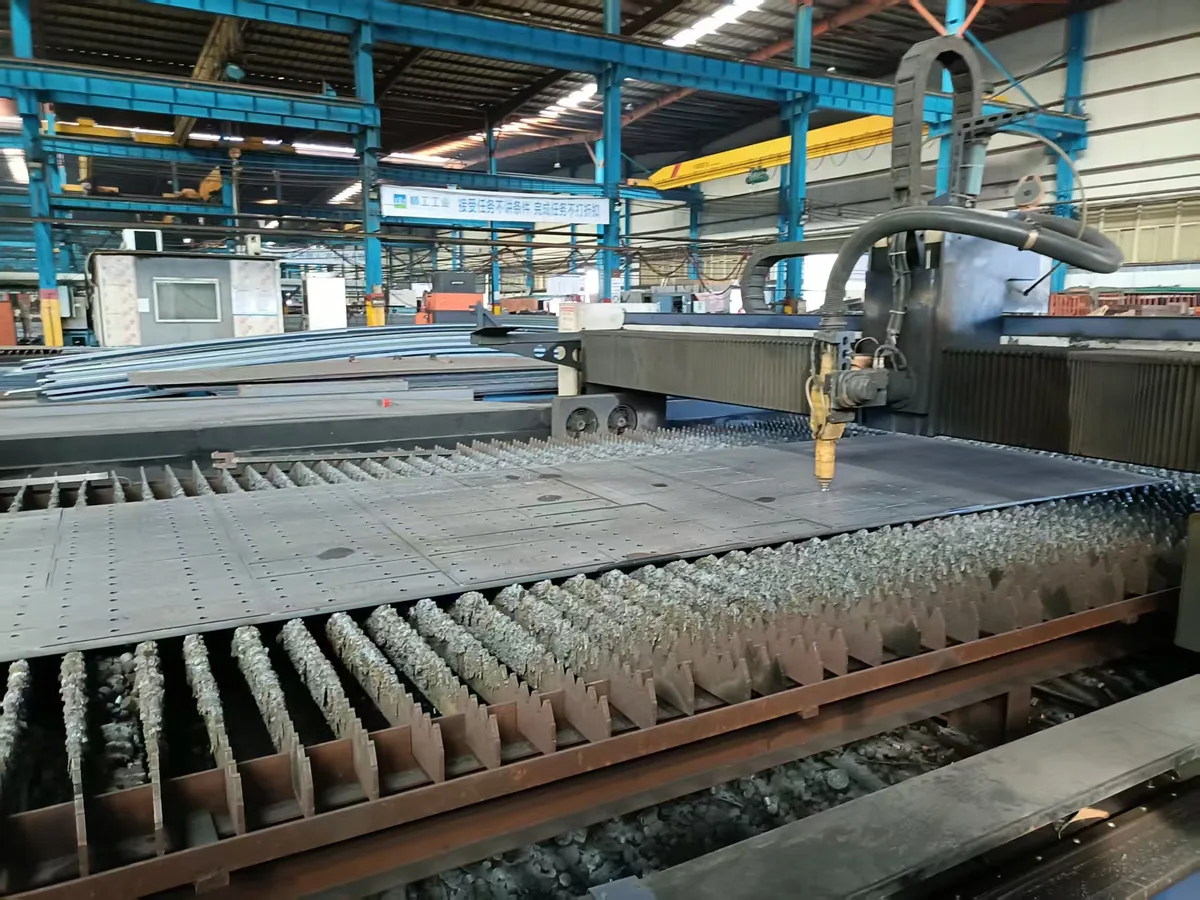
- Fabrication sequence covering cutting, hole making, forming, welding, heat input, stress relief, blasting, coating, and erection.
- Inspection class, traceability, document package, third-party hold points, and delivery sequence by mark or erection zone.
Failure review
Risks the specification must address
- An assumed grade equivalence can miss chemistry, toughness, thickness range, delivery condition, test frequency, or dimensional requirements.
- Weld cracking, lamellar tearing, distortion, or reduced toughness can follow when material, joint restraint, heat input, preheat, consumables, and through-thickness demand are not reviewed together.
- Wrong thickness tolerance, flatness, surface class, or cutting allowance can disrupt nesting, machining, fit-up, and final member geometry.
- Lost heat or piece traceability can make certificates difficult to connect to cut parts after processing.
Procurement matrix
Compare the service, material route, and evidence
| Project need | Material route to review | Required confirmation |
|---|---|---|
| General welded building fabrication | A36, S235, S275, S355, or project-designated grade in the governing standard | Exact standard, grade, thickness, yield requirement, weldability, and certificate |
| Low-temperature or impact-critical service | Grade and subgrade with specified Charpy requirements | Test temperature, energy, orientation, thickness, sampling, and design approval |
| Heavy restrained welded detail | Plate with reviewed chemistry, delivery condition, and through-thickness requirement when needed | CEV or Pcm, Z-quality if specified, weld procedure, UT, and joint restraint |
| Cut and machined components | Plate with controlled flatness, surface, internal quality, and allowance | Drawing, nesting, edge, tolerance, UT class, marking, and traceability |
Acceptance package
Standards, inspection, and fabrication
Standards and inspection
- Cite the complete product standard, edition when controlled by the project, grade, subgrade, delivery condition, product form, and thickness range.
- State certificate type, heat and piece traceability, tensile and Charpy requirements, chemistry limits, CEV or Pcm reporting, and any UT or through-thickness class.
- Define dimensional standard, thickness tolerance class, flatness, surface condition, edge condition, marking, and rules for repair.
- List third-party inspection points and distinguish witness, review, and hold activities from routine mill documentation.
Fabrication controls
- Provide drawings or a cut list with part mark, dimensions, holes, bevels, rolling direction, forming radius, machining allowance, and traceability requirement.
- Have the fabricator review weld process, consumables, preheat, heat input, interpass temperature, restraint, post-weld treatment, and coating preparation.
- Confirm whether thermal cutting, cold forming, hot forming, or stress relief changes the required grade, delivery condition, or mechanical-property verification.
Continue with the registered product owners
A36 carbon steel plate
Review the A36 plate owner while retaining the project standard and thickness checks.
Open ownerS355 carbon steel plate
Review a higher-strength EN grade owner and its technical purchasing fields.
Open ownerStructural grade selection guide
Compare standards, strength, toughness, weldability, and evidence without declaring automatic equivalence.
Open ownerOrder-ready data
RFQ requirements
Send these fields together so technical review starts from one consistent specification.
Prepare an RFQ- 01
Design and product standards, exact grade and subgrade, product form, thickness, dimensions, quantity, and delivery condition
- 02
Service temperature, Charpy requirement, fatigue or seismic notes, through-thickness demand, and corrosion or fire provisions
- 03
Chemistry limits, CEV or Pcm, certificate, tensile, impact, UT, traceability, and third-party inspection requirements
- 04
Cutting, holes, bevels, forming, machining, weld route, blasting, primer, tolerances, and marking
- 05
Part schedule, package limit, delivery sequence, destination, unloading method, and requested shipment window
Frequently asked questions
Can ASTM A36 be substituted for S235 or Q235?
A substitution needs a documented comparison under the project rules. Chemistry, mechanical properties, thickness effects, delivery condition, dimensions, testing, toughness, and welding requirements may differ.
When should Charpy impact testing be stated?
The responsible designer should define it when service temperature, thickness, restraint, loading rate, fatigue, seismic demand, or project rules make toughness relevant. The RFQ needs temperature, energy, orientation, and sampling details.
What information is needed for cut-to-size structural plate?
Provide the drawing or cut list, grade, thickness, dimensions, tolerances, edge and bevel details, holes, rolling direction, marking, traceability, inspection, coating preparation, packing, and sequence.