









Introduction
In international infrastructure and industrial engineering procurement, structural engineers and purchasing teams frequently evaluate steel grade equivalencies between American (ASTM) and European (EN) metallurgical standards.
Two of the most widely specified carbon structural steel grades globally are ASTM A36 and EN 10025-2 S235JR (1.0038). While frequently treated as functional equivalents, key nuances in chemical limits, yield strength guarantees, and impact testing requirements dictate proper selection for critical load-bearing applications.
1. Mechanical Properties & Strength Comparison
Both grades belong to the low-carbon structural steel family, exhibiting excellent ductility, machinability, and ease of welding. However, their minimum yield and tensile strength thresholds differ slightly based on plate thickness:
| Mechanical Metric | ASTM A36 | EN 10025-2 S235JR (1.0038) |
|---|---|---|
| Minimum Yield Strength ($R_{eH}$) | 250 MPa (36 ksi) | 235 MPa (for $t \le 16\text{mm}$) |
| Tensile Strength ($R_m$) | 400 - 550 MPa (58-80 ksi) | 360 - 510 MPa |
| Elongation at Break ($A_5$) | ≥ 20% (in 200mm) / ≥ 23% (in 50mm) | ≥ 26% (for $t \le 40\text{mm}$) |
| Impact Energy (Charpy V-Notch) | Optional (Supplementary Req. S5) | ≥ 27 Joules at +20°C (JR suffix) |
💡 Engineering Insight: For structural framing where rigid minimum yield strength is calculated strictly at 250 MPa, verifying plate thickness and chemical carbon equivalent values (CEV) ensures seamless substitution.
2. Chemical Composition Limits (%)
The chemical tolerances of both grades are designed to support fast field welding without preheating under normal ambient temperatures:
| Element | ASTM A36 (Plates $t \le 20\text{mm}$) | EN 10025-2 S235JR |
|---|---|---|
| Carbon (C) Max | 0.25% | 0.17% (for $t \le 16\text{mm}$) / 0.20% ($t > 40\text{mm}$) |
| Manganese (Mn) | Not mandatory ($t \le 20\text{mm}$) | 1.40% max |
| Silicon (Si) Max | 0.40% | — |
| Phosphorus (P) Max | 0.04% | 0.035% |
| Sulfur (S) Max | 0.05% | 0.035% |
3. Procurement Checklist for Overseas EPC Projects
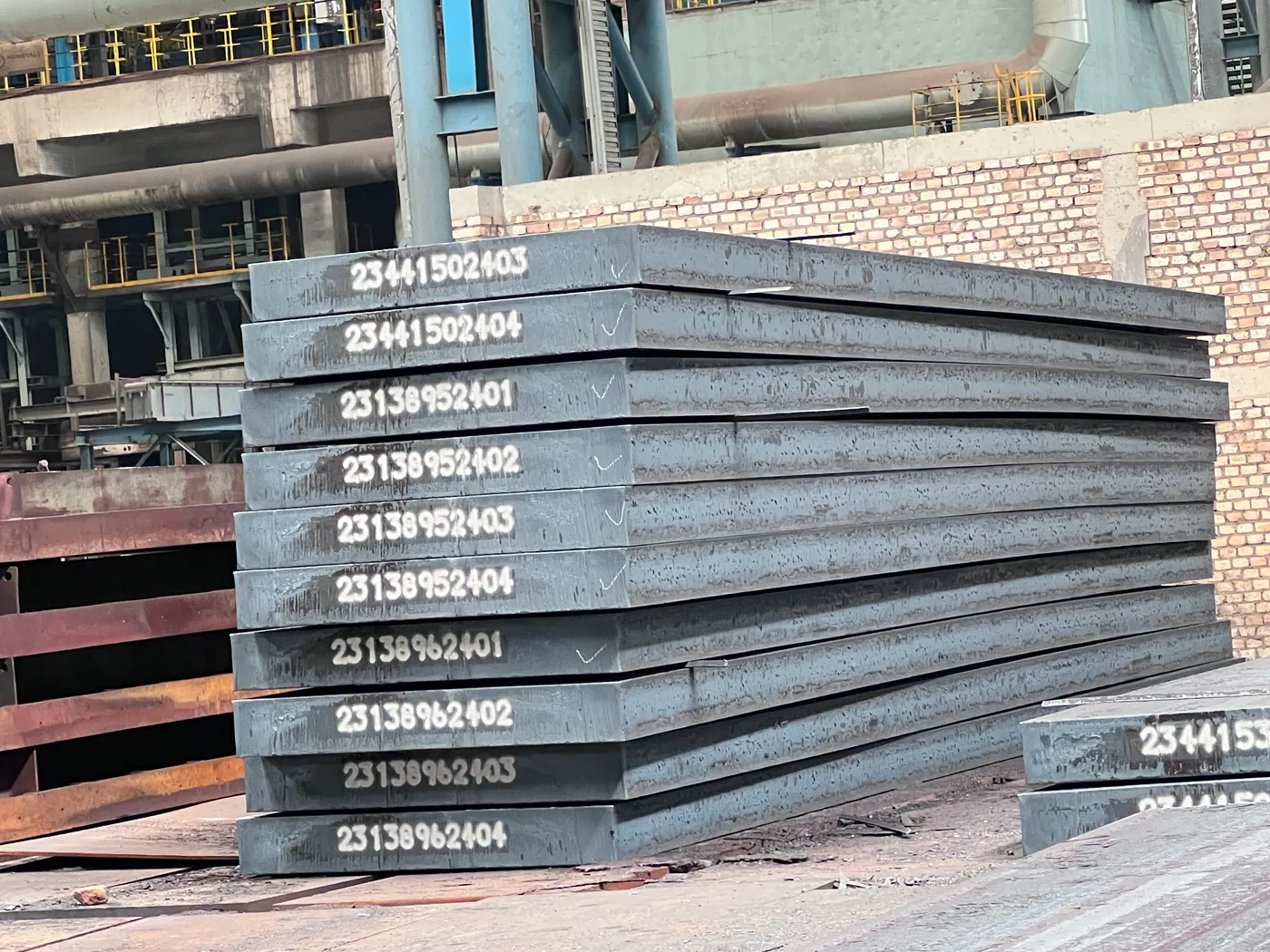
When sourcing structural H-beams, plates, or hollow sections under these specifications from Chinese mills, verify the following documentation:
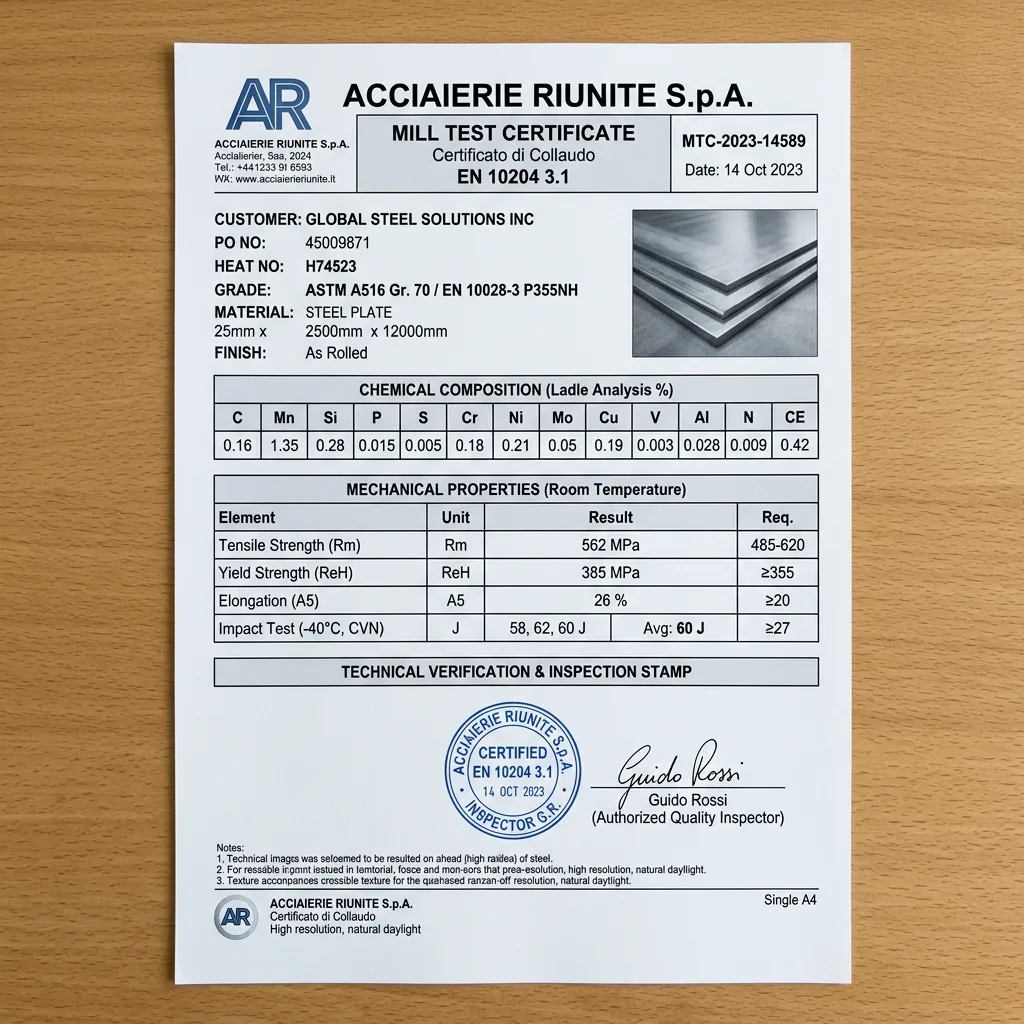
- Dual Certification: Request MTCs endorsed with both ASTM A36 and S235JR grade compliance if project specifications require cross-border approval.
- Impact Testing: For cold-climate installations, specify Charpy V-notch testing at 0°C or -20°C (upgrading from S235JR to S235J0 or S235J2).
- Seaworthy Packaging: Ensure structural bundles are secured with high-tensile steel straps and rust-inhibitive oil coating.
Conclusion
Understanding the subtle metallurgical differences between ASTM A36 and S235JR allows procurement teams to optimize material sourcing without compromising structural integrity.
Contact the Tsingshan Steel engineering team today to receive mill-certified test reports, dual-grade availability logs, or competitive project quotes.